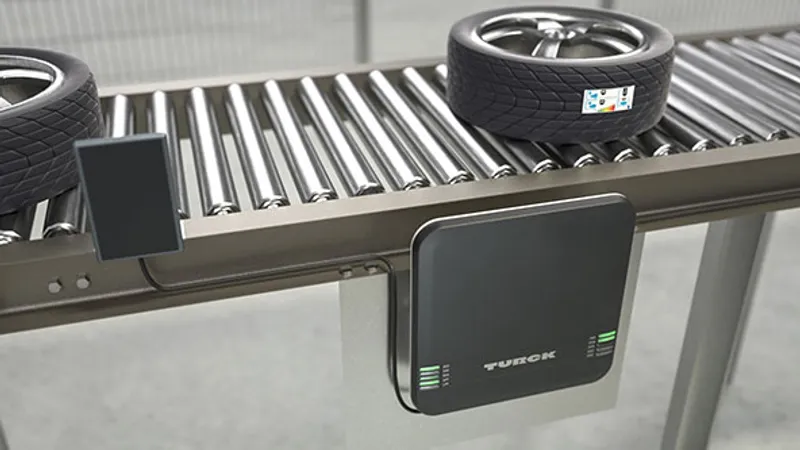
A practical framework for evaluating your facility before committing to a UHF RFID deployment. Covers RF environment challenges, read zone design, antenna placement, tag selection, and what a meaningful proof-of-concept looks like.
Why Site Assessment Matters
UHF RFID is a radio technology, and radio waves interact with physical environments in ways that are predictable but not always intuitive. Metal reflects them. Water absorbs them. Other RF sources interfere with them. The geometry of your facility, the materials your products are made from, and the density of tagged items all affect system performance.
A site assessment answers a fundamental question: can we reliably read the tags we need to read, in the locations we need to read them, at the speed our operation requires?
Skipping this step is the single most common cause of RFID project failure. Vendors will show you impressive demos in controlled environments. Those demos tell you almost nothing about how the system will perform in your facility. The 15 minutes you spend scanning tagged items in a quiet demo room is not representative of what happens when hundreds of tagged items move through a metal-framed doorway next to a bank of variable-frequency drives.
The cost of getting it wrong: Retrofitting a poorly designed RFID installation typically costs 2-3x more than doing the assessment and design work upfront. We’ve seen organisations spend six figures on hardware only to discover that their read rates drop below 80% in production conditions, rendering the data unreliable.
Evaluating Your RF Environment
Your facility is an RF environment whether you’ve deployed RFID or not. Wi-Fi access points, Bluetooth devices, fluorescent lighting, electric motors, and other equipment all generate electromagnetic energy. The first step in a site assessment is understanding what’s already happening in the UHF band (860-960 MHz) at your location.
Sources of Interference
Not all interference is obvious. Here are the common culprits in industrial environments:
Source
Impact
Severity
Variable-frequency drives (VFDs)
Broadband noise across UHF spectrum
High
Conveyor motors
Intermittent interference, harmonics
Medium-High
Fluorescent lighting
Low-level broadband noise
Low-Medium
Wi-Fi access points
Adjacent band, rarely direct conflict
Low
Other RFID readers
Direct channel conflict, reader collision
High
Nearby cellular/radio towers
Can desensitise reader receivers
Variable
Material Challenges
The materials in your facility and on your tagged items fundamentally affect UHF RFID performance. Understanding these interactions is non-negotiable.
Metal reflects UHF radio waves. This is both a problem and, sometimes, an advantage. Metal shelving, steel beams, metal-clad walls, and metallic products create multipath reflections that can cause dead zones or phantom reads. However, controlled reflection can also be used to direct RF energy where you need it. The key is understanding where metal exists relative to your planned read zones.
Water and water-based liquids absorb UHF energy. This is why reading tags on cases of bottled water, wet textiles, or products with high moisture content requires careful antenna positioning and often specialised tag selection. In commercial laundry operations, for example, reading tags on wet linen coming out of a washer requires a very different approach than reading dry linen going into storage.
Dense packing of tagged items creates its own challenges. When tags are in close proximity, they can couple with each other, detuning their antennas and reducing read reliability. The orientation of tags relative to the reader antenna also matters significantly with densely packed goods.
Practical tip: Walk your facility with a spectrum analyser before you install anything. A baseline RF survey takes a few hours and gives you a clear picture of the noise floor across the UHF band. Many RFID reader manufacturers offer spectrum analysis modes built into their readers, so you may not need separate equipment.
Designing Read Zones
A read zone is the physical volume in space where your reader can reliably communicate with tags. Designing read zones is the core engineering challenge of any UHF RFID deployment. You need to answer three questions for each read point:
Where do you need to read? Define the physical boundaries. A dock door might be 3m wide and 3.5m tall. A conveyor read point might be 0.8m wide and 0.3m tall. The tighter you can define the zone, the more reliable your reads will be.
Where do you need to not read? This is equally important and often overlooked. If your reader picks up tags in an adjacent aisle, on a nearby cart, or from the room next door, you’ll generate false events that corrupt your data. Constraining the read zone is often harder than extending it.
How fast are items moving through the zone? A tag moving through a read zone at walking pace gives the reader hundreds of milliseconds to complete communication. A tag on a conveyor belt at 2m/s might only be in the zone for 200ms. At high speeds, every millisecond of reader-to-tag communication time matters.
Simplified top-down view of a single-antenna read point. The desired read zone (blue) must be contained within the RF field (dashed) while minimising overshoot into adjacent areas.
Zone Containment Strategies
Controlling where your reader does and doesn’t read is critical. Common approaches include:
Physical shielding. RF-absorbing materials or metal enclosures can constrain the read zone. Tunnel readers on conveyor belts are a classic example: the tagged item passes through a shielded enclosure where the RF energy is contained, eliminating stray reads.
Antenna selection and orientation. Antennas come in different beam widths. A narrow-beam antenna reads a focused area; a wide-beam antenna covers more space but is harder to contain. Circular polarisation reads tags in any orientation; linear polarisation is more sensitive but requires tags to be roughly aligned. Choosing the right antenna for each read point is one of the most impactful decisions in the design.
Power tuning. Readers allow you to adjust transmit power. More power means longer range but also more overshoot. The goal is to use the minimum power that reliably reads all tags in the desired zone. This often requires iterative testing with real tagged items in the real environment.
Software-based filtering. When physical containment isn’t enough, software can help. RSSI (signal strength) thresholds, read-count minimums, and directional logic can all filter out stray reads. These should supplement physical design, not replace it.
Antenna Selection and Placement
The antenna is the interface between your reader and the physical world. Selecting and positioning antennas correctly accounts for a disproportionate share of deployment success.
Key Antenna Parameters
Parameter
What It Means
Typical Range
Gain (dBi)
How focused the beam is. Higher gain = narrower, longer beam
3-12 dBi
Beamwidth (degrees)
The angular width of the main beam at -3dB
30-100 degrees
Polarisation
Circular (orientation-independent) or Linear (orientation-sensitive)
RHCP, LHCP, Linear
VSWR
Impedance match quality. Lower is better. <1.5:1 is good.
1.1:1 - 2.0:1
Front-to-back ratio
How much energy goes forward vs backward. Higher = less overshoot behind
15-25 dB
Placement Principles
Mount antennas perpendicular to the tag’s path of travel whenever possible. A tag moving parallel to the antenna face spends maximum time in the beam, giving the reader the best chance to complete communication.
Account for the near field. Antennas have a near-field region (typically within 30-50cm) where the beam hasn’t fully formed. Tags in the near field may not read reliably, and mounting an antenna too close to the tagged items is a common mistake.
Consider the mounting surface. Metal surfaces behind an antenna act as a ground plane, which can improve performance for some antenna types. Mounting an antenna on drywall or wood will produce different results than mounting on a steel beam. Test both if your installation allows flexibility.
Cable runs matter. Every metre of coaxial cable between your reader and antenna introduces signal loss. Keep cable runs as short as practical, and use low-loss cable (LMR-400 or equivalent) for longer runs. A 10m run of cheap cable can easily cost you 2-3 dB of effective power, which translates to meaningfully shorter read range.
Tag Selection for Your Environment
The tag you choose has to survive your operating environment and perform reliably on your specific items. This is where many deployments go wrong, often because the tag was selected based on datasheet specifications rather than real-world testing.
Environmental Survival
Consider what your tags will be exposed to over their expected lifetime:
Temperature. Standard tag inlays are rated to around 85C. Industrial laundry processes hit 150C+ in tunnel finishers. Autoclave sterilisation reaches 134C. If your tags need to survive thermal extremes, you’ll need ruggedised tags with high-temperature adhesives and encapsulation, and these cost significantly more than standard inlays.
Moisture and chemicals. Tags in food processing, healthcare, or laundry environments face repeated exposure to water, detergents, solvents, or disinfectants. The tag’s encapsulation and the chip-to-antenna bond need to withstand this. Failure modes are often gradual: a tag might work fine for the first 50 wash cycles and then fail as moisture slowly penetrates the encapsulation.
Mechanical stress. Will tags be bent, crushed, abraded, or subjected to vibration? A flexible inlay on a garment handles bending well. The same inlay on a rigid pallet that gets dropped will crack. Match the tag’s physical form factor to the mechanical environment.
RF Performance on Your Items
A tag’s advertised read range is measured in free air, attached to nothing. Real-world performance depends entirely on what the tag is attached to.
Metal-mount tags are specifically designed to work on or near metal surfaces. Standard inlays will be completely detuned by metal proximity. If you’re tagging metal assets, you need purpose-built metal-mount tags, which use a spacer or ground plane to maintain performance.
Liquid-adjacent tags face absorption challenges. Tags on bottles, wet textiles, or fluid containers need to be positioned and oriented to minimise the RF path through liquid. Sometimes this means placing the tag on a protruding label, a cap, or a dry corner rather than directly on the item surface.
Test with real items in real conditions. Request samples from at least 2-3 tag vendors. Attach them to your actual products in the orientations they’ll be in during operation. Test read rates in your actual facility at your expected throughput. A tag that reads at 8 metres in free air might only read at 2 metres on your product. That’s not a defect; it’s physics. You need to know this before you order 100,000 of them.
Running a Meaningful Proof-of-Concept
A proof-of-concept (PoC) is your opportunity to validate assumptions before committing to a full deployment. The key word is “meaningful.” A PoC that doesn’t reflect real operating conditions will give you false confidence.
What a Good PoC Covers
Representative volume. If your operation processes 5,000 items per hour, your PoC needs to test at that throughput, not 50 items hand-carried through a reader. Throughput-dependent failures, like reader session timeouts and anti-collision bottlenecks, only appear at scale.
Real environmental conditions. Test during normal operations, with conveyors running, motors operating, and people moving through the space. A weekend test in an empty facility won’t reveal interference from production equipment.
Edge cases. What happens when a cart is overloaded? When items are wet? When two carts pass through the read zone simultaneously? When the power flickers? Define your edge cases before the PoC and deliberately test them.
Duration. A PoC needs to run long enough to capture variability. A one-hour test might show 99.5% read rates. A two-week test might reveal that read rates drop to 92% on humid days, or that a specific shift’s workflow creates bottlenecks. A minimum of two weeks is a reasonable baseline for most environments.
Metrics That Matter
Read rate: What percentage of tags are successfully read in each pass through a read zone? For most applications, you need sustained rates above 99%. Below 95%, the data becomes unreliable enough that staff stop trusting the system.
Stray read rate: What percentage of reads are from tags outside the intended zone? Even 1% stray reads can corrupt inventory data if the volume is high enough.
Read latency: How quickly after entering the zone is a tag read? This matters for real-time applications where you need to trigger actions (like diverting a conveyor) based on tag identity.
Consistency over time: Plot your metrics over the full PoC duration. Look for patterns correlated with time of day, shift changes, environmental conditions, or specific operational events.
The Full Assessment Checklist
Use this as a starting framework. Every facility is different, and your specific operation will likely add items to this list.
1
RF Environment Survey
Baseline spectrum analysis across 860-960 MHz band
Map all motors, VFDs, and high-power electrical equipment within 10m of planned read points
Identify existing wireless systems (Wi-Fi, Bluetooth, other RFID) and their frequencies
Note ambient noise floor at each planned reader location
Test during peak operational hours, not when the facility is quiet
2
Physical Environment
Map all metal surfaces within read zones (shelving, beams, doors, equipment)
Identify water and moisture sources (wash areas, steam, humidity)
Measure doorway and passage dimensions at all planned portal read points
Document temperature ranges (ambient, seasonal, near heat sources)
Note chemical exposure risks (cleaning agents, solvents, industrial chemicals)
Assess available mounting locations for antennas and readers
3
Operational Parameters
Document throughput requirements at each read point (items per hour/minute)
Measure item movement speeds through planned read zones
Define maximum acceptable read latency for real-time triggers
Identify peak load periods and their duration
Document current workflow and where RFID events integrate
4
Tag Requirements
Catalogue all item types to be tagged (materials, sizes, surface properties)
Determine expected tag lifecycle (single-use, months, years)
Test 2-3 candidate tags on real items in real conditions
Validate read performance at required distances and orientations
5
Infrastructure
Confirm power availability at each reader location (PoE or mains)
Confirm network connectivity at each reader location (Ethernet, Wi-Fi fallback)
Measure cable run distances from readers to antennas
Assess physical security of equipment locations (tamper risk, accidental damage)
Plan cable routing to avoid interference sources and physical hazards
Need help with your assessment?
We've designed and deployed UHF RFID systems across commercial laundry, manufacturing, and logistics environments. If you're evaluating RFID for your operation, we can help you get the site assessment right the first time.
Isaac Hayes is the founder of Luminar Software and a specialist in IoT integration and custom RFID software. He builds the systems that connect readers, sensors, and industrial hardware to the platforms businesses actually run on. His work spans medium enterprises through to publicly listed companies, delivering end-to-end solutions across warehouse management, supply chain visibility, and asset tracking. He holds patents in the RFID space and has led deployments in commercial laundry, logistics, and retail environments across Australia.
UHF RFID Explained: The Technology Revolutionizing Warehouse Inventory and Retail Tracking
UHF RFID changes warehouse inventory and retail tracking. Count 50,000 items in minutes with no line of sight needed. Learn how tags, readers, and antennas work together.
Isaac Hayes•
UHF RFID Site Assessment Guide
A practical framework for evaluating your facility before committing to a UHF RFID deployment. Covers RF environment challenges, read zone design, antenna placement, tag selection, and what a meaningful proof-of-concept looks like.
Isaac Hayes•
Understanding RFID Sessions
RFID sessions control how tags respond during inventory. Learn how session selection affects read performance in dense tag populations.

 Isaac Hayes •